
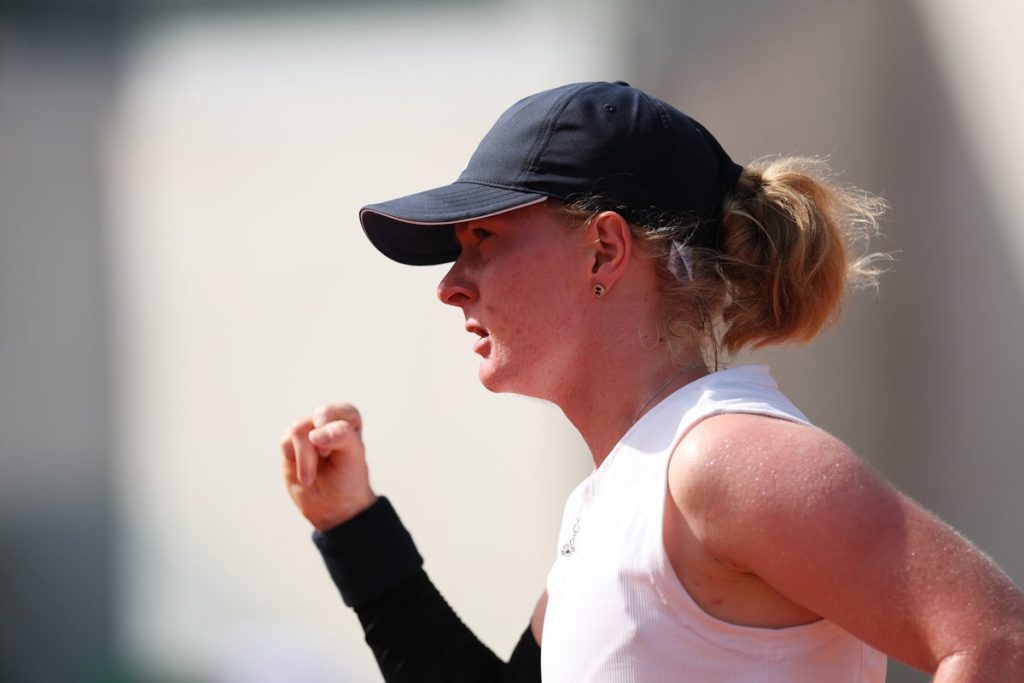
Yorkshire native Fran Jones will be among the top British tennis players to watch at her home grand slam as Wimbledon gets underway.
The 25-year-old has qualified for the main draw at a major for the third time, with all three of her main-draw entries coming this year, after an up-and-down first half to the season.
Her successes in 2026 include a first top-15 win, her first victory at a WTA 1000 tournament and her first grand slam win, achievements which are all the more remarkable given her history of struggles with various injuries and the rare genetic condition Ectrodactyly Ectodermal Dysplasia (EEC).
The condition means she only has three fingers and a thumb on each hand and seven toes across both feet, which makes holding a racquet and maintaining the grip strength to do so extremely challenging, while she often struggles with cramp and her physical durability.
EEC is also the source of the majority of the injuries which have dogged her throughout her career, and she required multiple surgeries in her younger years.
Jones started playing tennis at the age of five but was told by doctors at eight that despite her talent, her condition would make it impossible for her to pursue the sport as a career.
She told the LTA: “It didn’t change anything for me, it didn’t change my approach. I just had, like any kid, things that I was dealing with…and I dealt with it.
“That was when I was limited by someone, or there was an attempt to limit me, and that just pushed me even further to commit. I thought ‘someone’s just telling me I can’t do something, and I actually think I can… I knew I had a mentality where I was going to pick at every little detail, and make sure every corner was covered.”
Her condition has made it difficult for her to produce consist results and maintain fitness over the course of the long and gruelling tennis season. In 2024 she entered 20 tournaments, withdrawing from seven of those partway through a match and pulling out of another between matches as her body struggled to hold up.
Most notably she collapsed when trailing in the deciding set of her second-round tie at a tournament in Colombia last year and had to be taken off court in a wheelchair, which she later attributed to a lack of time acclimatising to Bogota’s high altitude.
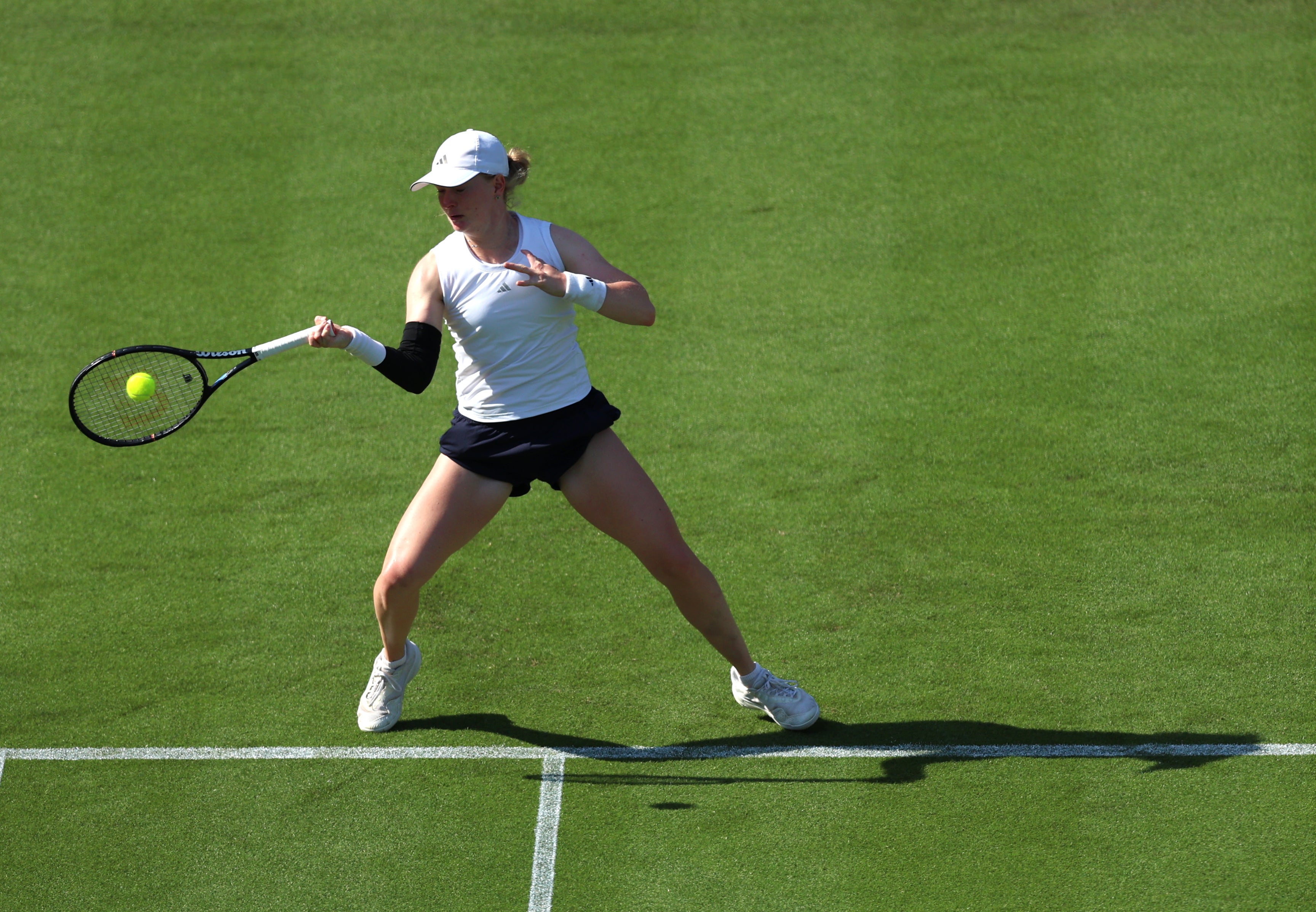
Currently ranked 103rd in the world, Jones has scraped into the main draw at Wimbledon but was ranked as high as 65th this February.
She began her year with a maiden top-15 win as she stunned world No 15 and former US Open semi-finalist Emma Navarro, the second seed, at a WTA 250 tournament in Auckland.
She then fought back from a set and 3-0 down against Sinja Kraus to reach the quarter-finals, where she was forced to retire against Xinyu Wang.
A glute injury after she slipped and fell during the match forced her retirement in the first round of the Australian Open, the 22nd retirement of her professional career, where she was in tears as she received treatment from a physio on court and in her press conference afterwards.
She has repeatedly refused to let her condition define her – moving away from home at the age of nine in order to make her dream happen – but she admitted after the withdrawal in Melbourne, “I’m terrible at reining it in. I push myself too far. It’s against my identity to come off a court, [and yet] I’ve done it on so many occasions because whenever I’ve gone too far, something big has happened.”
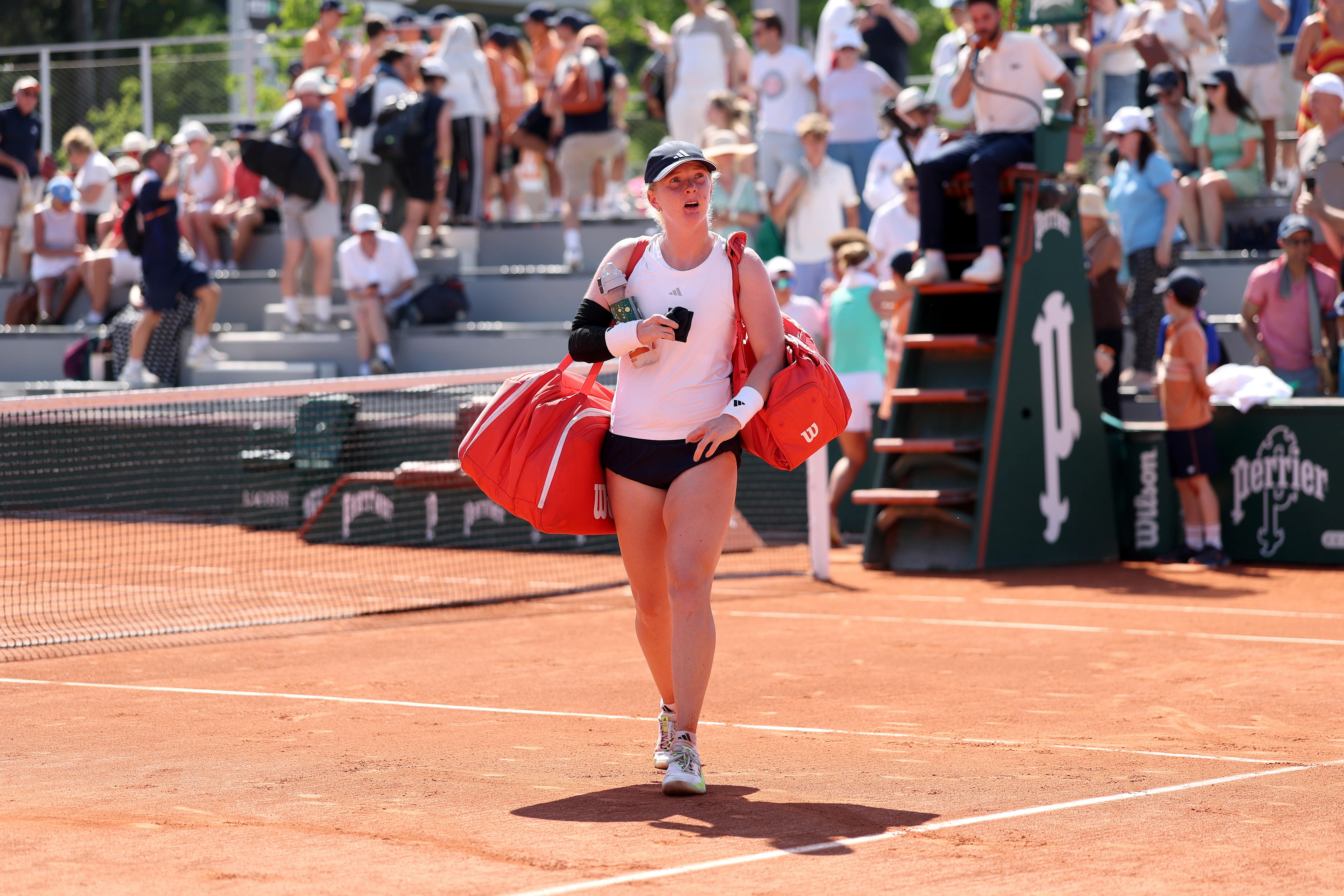
Growing up playing tennis on the clay courts of Barcelona, at the Sanchez Casal Academy, Jones’ style is very different to the majority of British players, who are more at home on grass and hard courts.
Her heavy topspin forehand is at its most potent on the red dirt while she is a gritty and resilient fighter, with her tenacity immediately apparent on court.
And she has proven that on her day she is a dangerous opponent to come across. She made her Wimbledon debut in 2021, pushing Coco Gauff in a closely-fought encounter, while a landmark straight-sets win against Venus Williams in Miami earlier this year marked her first victory at a WTA 1000 event.
A leg injury and concussion after a freak accident at a gym in the US has pushed her back down outside the top 100, but she returned in stunning fashion at the French Open last month as she won her first ever grand slam main-draw match, at the seventh time of asking.
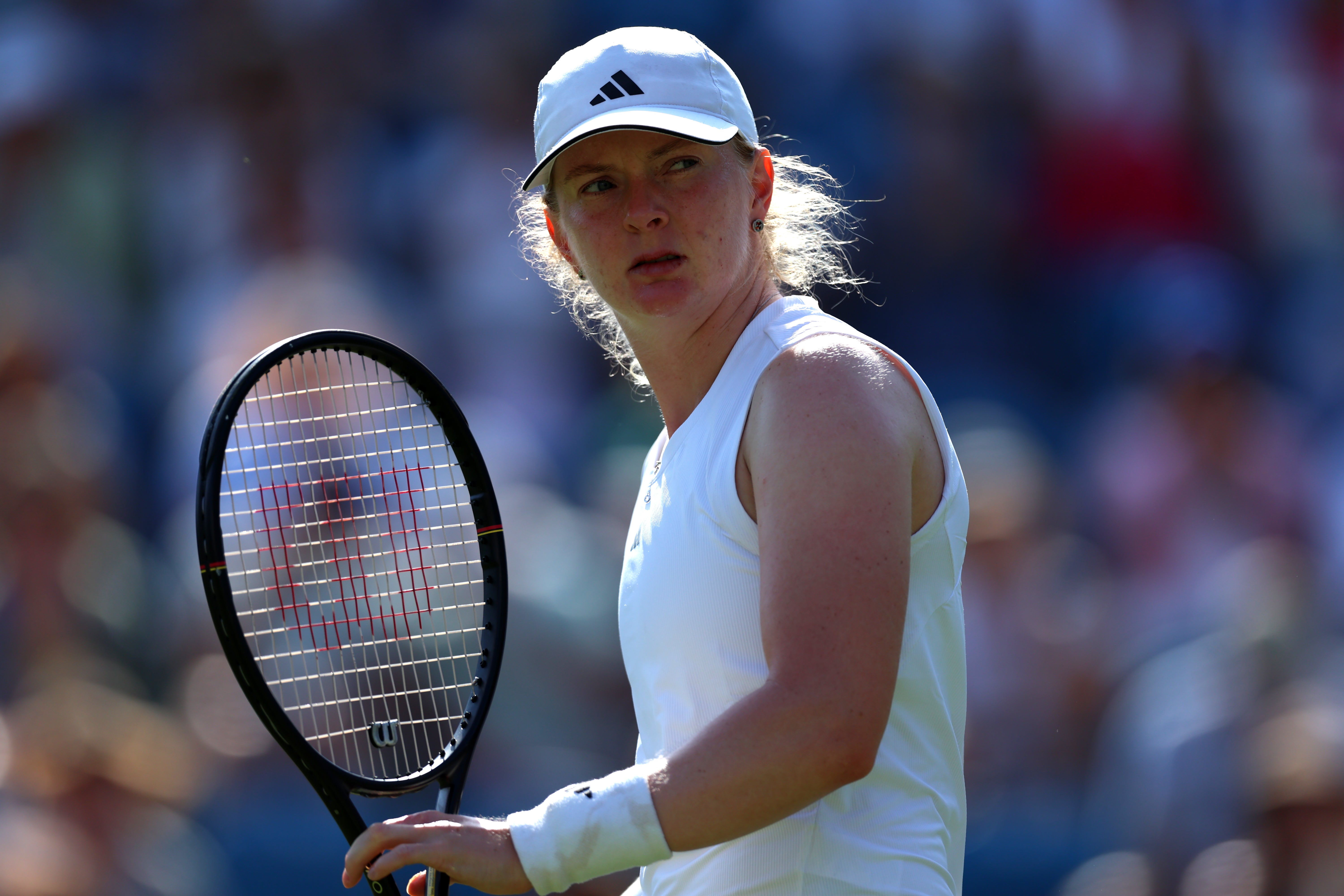
She fought back from a set down to defeat 2023 Roland-Garros semi-finalist and former world No 10 Beatriz Haddad Maia in a gruelling, physical encounter, before rushing to celebrate with her parents.
“Normally I’m one to say you shouldn’t cry until the tournament is over but I think, everything I’ve been through this year, it’s really been challenging,” she said.
“If we go back to the fact that I was told I couldn’t play tennis, when you’re winning matches in the main draws of slams and beating someone that was 10 in the world, it kind of nips that in the bud a bit.
“Of course, it’s a monumental moment but, don’t get me wrong, I’ll be going after the next match. I hope I can do this more often to keep getting the message across more.”
Her grass-court season began with losses to three higher-ranked players, 44th-ranked Laura Siegemund at Queen’s, 66th-ranked Talia Gibson in Nottingham, and 35th-ranked Jelena Ostapenko at Eastbourne, but that milestone French Open win will give her confidence that she can go beyond the first round at her home grand slam for the first time.
